Chapter 1
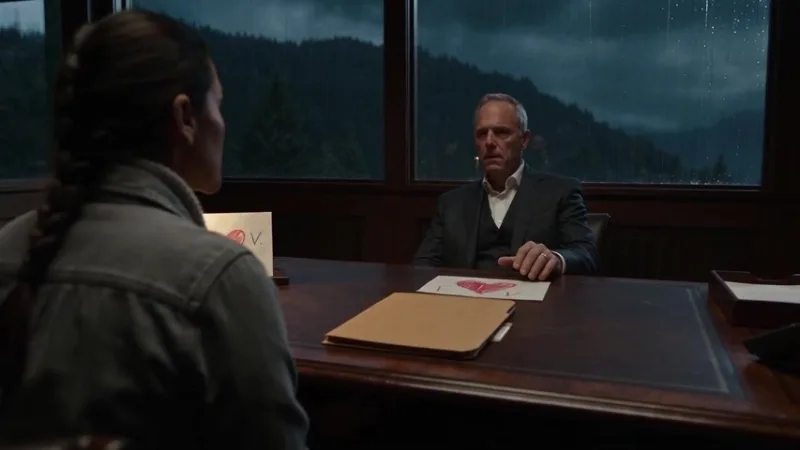
The crayon heart sat on Damian Locke’s desk like a wound that wouldn’t close.
I saw it at 12:47 a.m., my third week undercover at Locke Medical, when I let myself into the executive suite with a master key I’d copied from the housekeeping cart. My cart squeaked in the hallway. I’d learned to lift the front wheel over the tile seams. Three weeks of mopping floors and emptying wastebaskets and smiling at nurses who never remembered my name had taught me the rhythms of this glass-and-limestone palace. The executive wing went quiet after eleven. Security made rounds at midnight and again at two. I had sixty-three minutes.
The office smelled like leather and cold rain seeping through window seals. Damian Locke was not there, but his presence was in everything: the monogrammed blotter, the single fountain pen aligned with the desk edge, the floor-to-ceiling windows that made the dark Appalachian November look like it belonged to him. Under the door I could hear the building’s furnace breathing.
If I was wrong about him, I would go home and burn the notebook I carried in my scrub pocket. If I was right, I would destroy him.
Then I reached the desk.
The drawing was small, maybe four inches wide, taped to the corner of his monitor. Crayon, the red waxy and uneven, the lines wobbly in the way children make hearts that don’t look like hearts yet. Inside, in messy letters, someone had written E.V.
Below the heart, in a different hand-adult, precise-someone had written a date.
October 14. Thirteen months ago.
My husband died on October 13.
I stood in that office and felt the floor tilt. Elias had signed his donor card at twenty-two, a reckless kid who rode motorcycles and drove a beater truck and told me he wanted to be useful even after he was gone. I had held his dog tags in my fist at the funeral. I had worn his wedding ring on a chain around my neck until the chain wore a groove in my skin.
And now a child’s drawing, taped to Damian Locke’s monitor, said E.V. and October 14.
I heard a door close somewhere down the hall. Footsteps. I grabbed the drawing-no, I couldn’t. I couldn’t take it. I put my hand flat on the desk and forced myself to breathe. If Damian Locke had received Elias’s heart, the drawing made no sense unless it was a gift. A tribute. A child’s thank-you.
But Damian Locke was forty-four. He didn’t need a transplant. He walked these halls like a man carved from ice. Nobody whispered about his heart.
I looked at the drawing again. E.V.
The footsteps stopped outside the door. I stepped back, wiped my prints from the desk with the hem of my scrub top, and lifted the wastebasket like I belonged there. When the door opened, Damian Locke stood in a charcoal suit at 1 a.m., his tie loose, his gray eyes flat and tired.
“Housekeeping comes during the day,” he said.
“Night shift,” I said, keeping my voice mild. “Supervisor. You put in the request for the executive suite floors.”
He stared at me. The silence was long enough to feel like a test. “I did,” he said. “Make sure they don’t use the lemon polish on the walnut.”
“Yes, Mr. Locke.”
I moved past him with my cart. The drawing caught my eye one last time before the door clicked shut.
E.V.
I didn’t know it yet, but I had just started a countdown.