Chapter 1
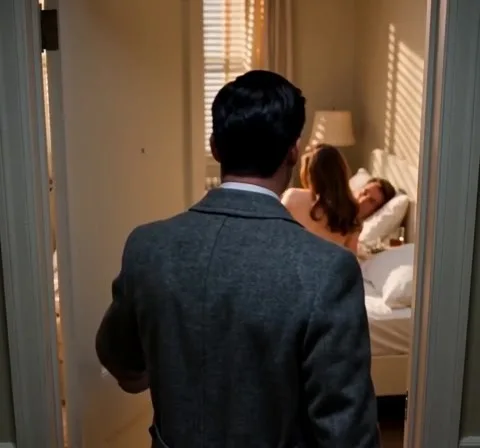
My flight got canceled and I came home early.
My boss was in my bed.
My wife pulled the sheet up and couldn't look at me.
He reached over to my nightstand, took one of my cigarettes and lit it.
"Close the door, kid."
I closed it.
I stood in my own hallway with my suitcase in my hand.
On Monday morning he gave me a raise.
I was twenty-seven, my wife was twenty-six, and he was thirty-four and owned every line I'd ever written.
It took me thirteen months to answer him.
I was whistling "Georgy Girl" in the elevator, and I want that on the record.
It wasn't even snowing in New York.
The snow was in Chicago, twenty-three inches before it quit, and that Thursday in January of 1967 it closed O'Hare for the first time anybody could remember.
I'd sat at LaGuardia until two o'clock with a ticket to go hold a floor wax client's hand through Saturday.
Spencer Talbot had signed that ticket himself.
Spencer was my boss, the creative head of Ashworth Stoddard and the wonder boy of Madison Avenue.
Five years earlier he'd hired me out of Scranton in the wrong shoes, and everything I knew about writing an ad, he taught me.
So I took a cab home to East Seventy-fourth Street to surprise my wife, Joanna.
There was a gray topcoat on the hook in our front hall.
I knew that coat. I'd been with him when he bought it.
My first thought was that we'd lost an account.
I actually walked down the hall working out what I'd say.
The bedroom door was shut, and I pushed it open with my free hand.
The late sun came through the venetian blinds in stripes.
His gray trousers were over my chair, folded on the crease, and her black slip was on the rug.
He'd had time to fold them.
Of course he had. He knew where I was supposed to be.
Joanna was sitting up with her back to me, and she pulled the sheet up with both hands and turned her face to the blinds.
Her long hair hung down her back, and she never once looked at me.
Spencer was lying back on my pillow in his undershirt.
He looked at the suitcase the way he looked at a layout somebody else had done.
He wasn't in any hurry, and he didn't have to be.
That year nobody on Madison Avenue would touch a kid who walked out on Spencer Talbot.
Every ad in my portfolio had his initials in the corner, and my fourteen thousand dollars a year was his to give.
He reached over to my nightstand and shook one of my Luckies out of my pack.
He didn't even smoke Luckies.
He lit it with my matches and dropped the match in my ashtray, and one corner of his mouth came up.
"Close the door, kid."
I've written what I should have said a few hundred ways since. I do it for a living.
What I did was take hold of the knob.
I turned it first, so the latch wouldn't click.
Then I pulled the door shut, gently, the way you do when people are sleeping.
I stood out there with my suitcase and listened to him say something low and easy.
I didn't hear her answer.
I didn't whistle going down.
I spent four nights in a hotel on Lexington, and on Monday at nine-fifteen I went to work, because I didn't know what else a person did.
Miss Tuttle, his secretary, told me to go right in.
There was a slip of paper squared up on his blotter, and he pushed it across the desk with one finger.
"Eighteen thousand, kid. That's four more than you're worth."
He lit a Parliament and looked at me over the match, the same corner of the same smile.
"How do you feel about Chicago?"