Chapter 1
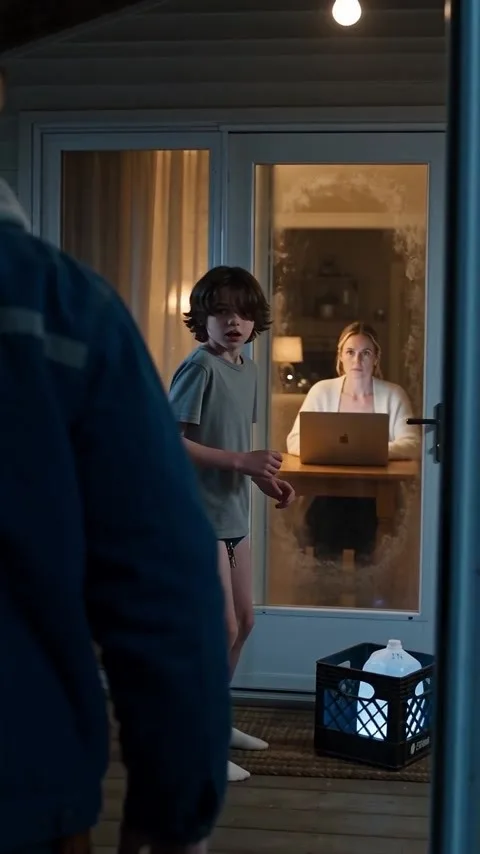
Grady Hollis was on the third floor of Osage County High School when the boiler gave out. The radiators knocked twice, like someone tapping a pipe, and then the whole building went quiet in a way schools never do. At 7:40, the principal came over the intercom and told teachers to send students to the gym. At 8:05, maintenance was told to clock out. Grady texted Kendra twice from the truck: Boiler blew. Coming home early. You up? Then: Not trying to wake anybody. Just pulling in. Both messages sat there.
The drive took twelve minutes. The river town had already gone still. Frost needled the grass, the levee road shining under the streetlights. He passed the church where Kendra ran the Wednesday night children’s program, the sign out front still advertising a canned-food drive. He passed the sheriff’s substation. Then he turned onto his street.
Every porch light was on except his.
He killed the truck in the dirt drive and sat a second, listening to the engine tick. Through the front window, the dining room glowed. Kendra’s laptop was open on the table. He could see the back of her head, dark blonde ponytail, cream cardigan. She didn’t turn. She always sat three-quarter to the window when she worked, so she could see the driveway without looking directly at it.
He didn’t want to wake Gus or Jo. He went around the side of the house, boots crunching frost, and came up the back steps.
The porch was dark except for one small light.
Jo’s star night light glowed from the milk crate in the corner. It threw a soft yellow shape across the boards, across the canvas cot, across his son.
Gus stood in the middle of the screened porch in a gray T-shirt and thin plaid pajama pants. White crew socks, soaked through, gray at the heels. No coat. No shoes. His arms were crossed tight, hands tucked under his ribs. His breath came out in small, even puffs.
The interior door was shut. Through the glass, Kendra sat ten feet away at the dining table, laptop open, reading glasses pushed up on her head. She had a mug beside her. The room behind her was warm enough that the window had fogged a little at the bottom.
Grady’s hand hit the storm-door latch before he knew he’d moved. The screen door banged against the siding. Gus flinched hard and turned, hands coming up halfway, like he’d been caught doing something.
“Why are you outside?” Grady said.
Gus didn’t answer. His lips were pale. His eyes went past Grady to the glass.
Kendra looked up then, slow, over the top of the laptop screen. She didn’t stand.
“He likes it out there,” she said. Her voice came muffled through the door. “It’s his fort. Go to bed, Gus.”
Grady crouched. The cot had a folded blanket, but the blanket was damp at one corner. The space heater beside it had a cracked cord, unplugged, dead. A plastic water bottle sat in the milk crate beside the night light. He picked it up. It was frozen solid. No slosh. Just a hard block of ice that knocked against the plastic when he tilted it. The flashlight next to it was cold enough to sting his palm.
He set the bottle down. His thumb caught the side of the crate.
Initials.
G.H. in fresh black marker near the bottom. Above it, older, faded into the plastic: T.R.
Grady stared at those letters. He didn’t know why they made the back of his neck go cold. He did know, without wanting to, that Gus’s initials were not T.R.
Under the bottle, wedged against the crate’s side, was a spiral school notebook. The cover was curled. Grady pulled it out.
He opened it.
Moons. Page after page. Small pencil crescents, drawn in rows, dozens on a sheet. Some smudged. Some pressed hard enough to dent the paper. He flipped through without counting, then went back and counted anyway. Sixty-one.
On the last page, in a nine-year-old’s handwriting, neat and small, were three numbered rules.
1. Don’t tell Dad. 2. Don’t cry where Jo can hear. 3. If she asks, say it’s a fort.
Grady stood. He walked to the glass and pressed the open notebook flat against it, right in front of Kendra’s face.
She looked at it. Then she closed the laptop lid, slow, and pushed her chair back. She rose. Her hand went down to the slide deadbolt on the interior door and rested there.
She didn’t turn it.
“Gus,” Grady said, without taking his eyes off her. “Go stand by the truck.”
Gus didn’t move. His voice came small. “I didn’t tell you.”
Grady’s throat closed. He looked at his son, at the wet socks, at the star night light glowing in the crate, at the sixty-one moons in his hand.
Not one night. A season.
And the door between them was locked from her side.