Chapter 1
I work nights.
I live on nineteen.
For five hours in a stuck elevator, a stranger told me all about the girl on nineteen whose boyfriend works nights.
He had no idea who he was talking to, and I never told him.
He knew her yellow kitchen and the plaid thermos she fills for the boyfriend.
He had a silver flask, and a gold wedding ring on the wrong hand.
When the car finally moved, he took me upstairs to meet her.
He used a key.
"Honey, I brought a friend."
She was twenty-five, I was twenty-eight, and both our names were on that lease.
"Every girl in the Bronx is cutting her hair on account of Son of Sam," the stranger said, and the flask bumped my arm in the dark. "Not her. She says she's not cutting it for some nut with a forty-four."
I had heard that sentence Sunday, word for word, at my own kitchen table.
That was the second hour.
It was July 13, 1977, the night all of New York went black, and we were in Car Two at Hudson Crest in Riverdale, stopped between fourteen and fifteen.
I worked nights at the Fire Department's Bronx office, and most nights I was gone by nine.
But every night for two years my girlfriend, Janine, had handed me my thermos at the door, and that night she hadn't.
I was almost to the Deegan before I noticed, so I turned around.
He was in the car when I ran for it, holding the door with his foot, and nineteen was already lit.
I pressed nothing.
"Visiting somebody?" he said.
"A friend," I said.
It was shorter than explaining, and I had quit explaining anything.
"Me too," he said, and winked, and fourteen floors later the lights died.
I had a three-cell flashlight for the dark lot at work, and I set it on the floor.
He said he was thirty-three and to call him Vic, and he never asked my name.
He was loud and good-looking, in a wide collar, and he called me pal.
He wore that ring on his right hand, the way the Greeks do, and the back of his left hand was shiny pink.
When I clicked the flashlight off to save the batteries, he talked faster.
"There's this girl up on nineteen. Her boyfriend works nights," he said. "Some city stiff, on the phones all night. Out the door at nine like a clock. I give it till nine-thirty, in case he forgot something."
He told me about the yellow kitchen, and the ice he'd been getting out of her freezer since April, and the phone cord that reaches the bed.
I ran that cord myself.
Around the fourth hour he told me how he really made his money, and I'll get to that.
I should have said something in the first hour.
I listen to people for a living, so I sat on that floor and listened, and every time the flask came around I took it.
Five hours in, a little after two-thirty, the car shuddered.
The power came back and the stranger from the elevator said, "Come up and meet her. You've earned a drink."
It wasn't the city's power, just the tower's old diesel generator, which Artie Lombardi, the super, had finally gotten running: elevators and hall lights, nothing else.
I followed him down my own hall under one weak bulb.
He had a key to my apartment.
"Honey, I brought a friend."
There were candles going on the kitchen table, and out the window the city was black, with fires along the south.
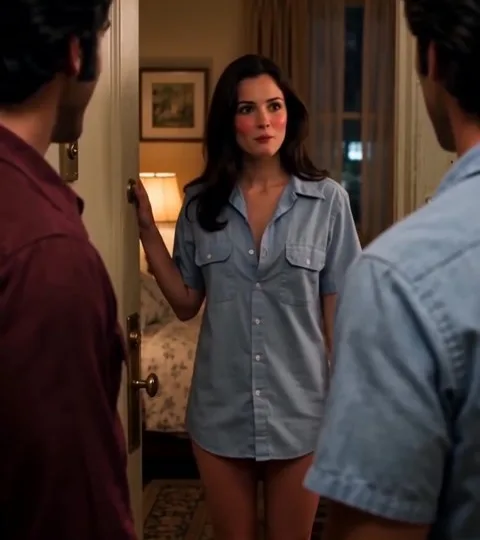
She came out of our bedroom in my shirt, saw me, and stopped with her hand on the door.
Her hair was down, her legs were bare, and the smile she had brought out for him was still on her face.
I owned two of those shirts, pale blue, for work.
I was wearing the other one.
"Marty," she said.
He knew that name.
He looked at her, still grinning, waiting to be let in on it.
He took a candle off the table and walked it over to the refrigerator, to the picture of us at Orchard Beach, me in sunglasses and a Yankees cap with my arm around her.
He had been getting ice out of my freezer since April and had never once looked at that picture.
He looked at the photograph of the two of us, he looked at me, and he burst out laughing.