Chapter 1
The Car With The Doors Locked
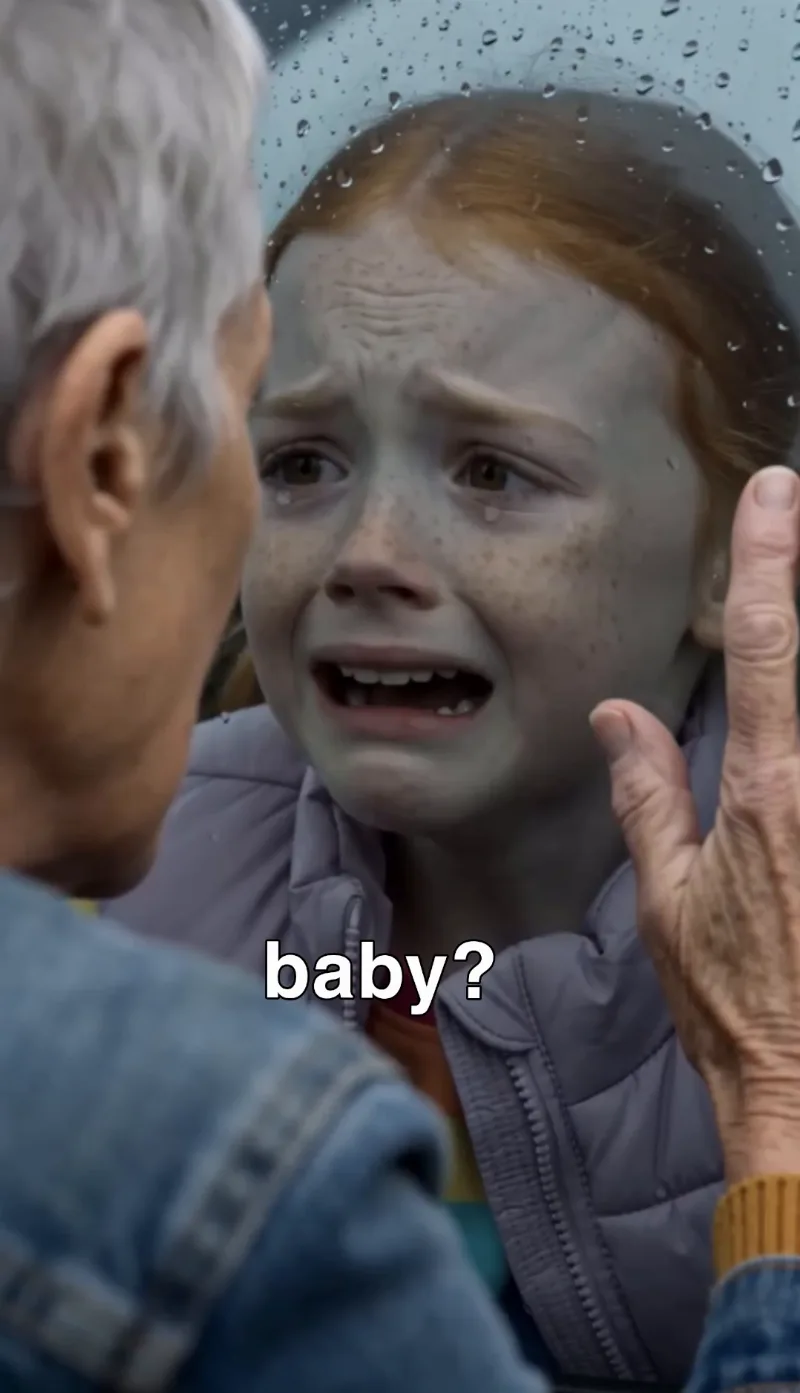
Poppy slammed the lock down on the driver's side, then scrambled across the bench seat and slammed down the other one, and by the time the movers had my husband's recliner halfway up the ramp of the box truck, my six-year-old granddaughter had sealed herself inside my car and wasn't coming out.
"Poppy Jean," my son said. "Out. Now."
She pressed both palms flat to the window. Rain ran down the glass in crooked lines between her fingers. Her mouth was already open, and what came out of it stopped the movers on the ramp.
"Grandma didn't put the keys in the freezer!"
Every person in my driveway went still. The two movers. My neighbor Gil Tanaka on his porch with his coffee. My daughter-in-law Brynn, standing by her SUV buttoned to the throat in that charcoal coat of hers. Me, in my barn jacket, holding the overnight bag somebody else had packed for me.
"Grandma didn't do it," Poppy screamed. "I saw!"
I went to the window and put my own palm on the outside of the glass, over hers. "Saw who, baby?"
She looked past me. Over my shoulder, straight at her mother.
And then she closed her mouth and didn't say another word.
I should tell you how I got to that driveway, because a week earlier I'd have told you it couldn't happen to a woman with my record.
For thirty-one years I drove a school bus in Tully County. Route 9, out past the quarry and back along the lake. I have backed a forty-foot bus down a gravel road in an ice storm with twenty-six children singing behind me, and I never once lost a kid, a mitten or my temper. Crosswords, I do in pen. I balanced my own checkbook the morning my husband Dale died, because the electric bill was due and he'd have hated for it to be late.
Then in June my car keys turned up in the freezer.
That's how it started. Just that. I'd torn the house apart for two days looking for them, and there they were, frozen to the bottom shelf under a carton of ice cream, and my son Wade stood in my kitchen holding them up with frost on the brass and his face gone gray and careful.
"Mom," he said. "Mom, what's going on with you?"
In August I came home from Lakeside Market and a front burner was glowing orange with nothing on it. The whole kitchen stank of hot iron. I knew I hadn't touched that stove since breakfast. I knew it the way I know my own name.
In September I ended up on the shoulder of Route 5 at twenty to nine at night, in the dark, with a sheriff's deputy shining his light in my face and asking me what year it was.
Each time, Wade was the one who found me. Each time, Wade was the one who was so gentle about it. And each time I got a little less sure that the woman I remembered being was the woman who was actually living in my house.
Three days before Poppy locked herself in my car, a judge I had never met signed an emergency order that said I could no longer make my own decisions. Wade was my temporary guardian. There'd be a full hearing in two weeks. Until then, Birchwood Terrace Memory Care had a bed for me, and my son had the paperwork folded in the inside pocket of his work jacket, right where he could touch it every few minutes to make sure it was still there.
"Poppy," Wade said again. He was smiling for the movers. Wade has always had a good smile. It got him out of detention in eighth grade and into a bank loan for the boat shop, and it was working on the movers now, who went back to lifting. "Honey, you're scaring Grandma."
"She's not scaring me," I said.
"Mom."
"She is not scaring me, Wade. Let her talk."
Poppy didn't talk. She sat in the driver's seat with her purple rain boots barely reaching the edge of the cushion, both hands in her lap now, and she looked down at them and started to cry without any sound at all. That was worse than the screaming. I have seen a thousand children cry. The quiet ones are the ones carrying something.
"Brynn," Wade said over his shoulder. "You want to help me here?"
Brynn didn't move from the SUV. "She'll come out when she's ready."
"We don't have till she's ready. Birchwood said ten o'clock."
"Then call Birchwood."
I watched her say it. Not a flicker on that face. In seven years of marriage to my son, Brynn Haskett had never once hugged me, never once called me Mom, never once stayed for pie. When Wade brought her home the first time, she shook my hand the way you'd shake a loan officer's. In July she left a stack of glossy brochures on my kitchen table, pictures of silver-haired women laughing at bingo, and she didn't say a word about them. She just set them down next to the fruit bowl and let them sit there.
So when my granddaughter looked at her mother and went silent, you can imagine what I thought.
Wade sighed. Then he reached into the front pocket of his jeans and pulled out a key.
It was a car key, worn silver at the teeth, and hanging off it was a little brass school bus with the yellow paint rubbed thin at the corners.
I knew that bus. The kids on Route 9 had pooled their lunch money for it the year I retired. A girl named Shayla Monroe gave it to me in a tissue-paper wad with a card that said WE WILL MISS YOU MRS. H YOU NEVER YELLED. That fob was on my spare key, and my spare key had been gone since April. I had turned the house upside down for it. I'd cried over it, the way you cry over a small thing when the big things are too big.
"Where did you get that?" I said.
Wade pressed the button. The locks popped up with a clunk.
"You gave it to me, Mom." He said it kindly. He used his nurse voice. "At Easter. Remember? You said you wanted me to have a spare in case."
I didn't remember. I stood there in the rain and searched my own head for Easter, and I found the ham and the deviled eggs and Poppy in a yellow dress hunting plastic eggs under the porch steps, and I did not find myself handing my son that key. But I also didn't find myself not handing it to him. There was just a blank. And that blank was the most frightening thing I'd ever felt, because six months ago there wouldn't have been a blank. There'd have been an answer.
That's what they do to you. They don't have to prove you're crazy. They only have to make you wonder.
Wade opened the door and lifted Poppy out. She went stiff as a board against his shoulder, her boots kicking, and one of them came loose and dropped in the gravel. Brynn walked over, picked it up, took Poppy from him and carried her to the SUV without a word to anybody. Poppy's face was pressed into her mother's coat. She didn't look back at me.
Gil came down off his porch then, his slippers soaking through. Gil is seventy-two and practiced estate law in Jefferson City for most of his life before he retired to the lake to fish badly.
"Lottie," he said low, while Wade was talking to the movers. "You don't have to get in that truck."
"It's not the truck. It's Wade's truck."
"You know what I mean."
"The judge signed it, Gil."
"Judges sign things." He looked at Wade's back. "I'll come see you. Monday. You tell them at the desk I'm your lawyer."
"You don't practice anymore."
"I still have a license and a tie. Monday."
Birchwood Terrace is forty minutes from the lake, off the highway past the outlet mall, and it smells of lemon cleaner poured over something the lemon can't quite cover. Wade talked the whole drive. The food was supposed to be good. There was a courtyard with a fountain. There was a woman on staff who used to teach piano. He'd bring my crossword books. He'd bring Poppy on Sundays.
I watched the mile markers. I kept thinking about that brass bus, and about the way Poppy's eyes had gone to her mother.
The memory-care wing is behind a heavy door with a keypad and a small window of glass that has wire running through it in diamonds. A young aide named Tamika walked me through it, kind and quick, showed me a beige room with a twin bed and a flowered quilt and blinds that made stripes across a green vinyl chair.
"What's the code?" I asked her. "For the door."
She had the decency to look sorry. "Family gets the code, Miss Loretta. It's for residents' safety."
"I'm not a resident. I'm a school-bus driver."
"Yes, ma'am."
Wade kissed my forehead in the hallway. His beard scratched. That orange hunting cap he wears all year, even in July, was pushed back on his head, and for one second he was the nine-year-old who used to fall asleep in the front seat of my bus on the long route home.
"It's for your own good, Mom," he said. "Two weeks. We'll see what the judge says."
Then he walked to the heavy door and punched in four numbers with his thumb, and I watched through the wire glass as it closed behind him.
The keypad beeped twice. The lock slid home.
And I understood, standing in that lemon-smelling hallway in my barn jacket, that my son knew the code to the only door out of this place, and I did not, and in two weeks a judge was going to ask the two of us which one of us was telling the truth.